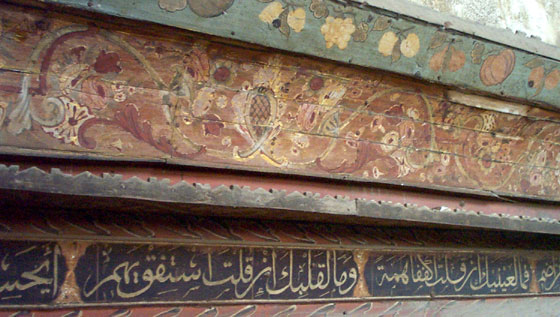
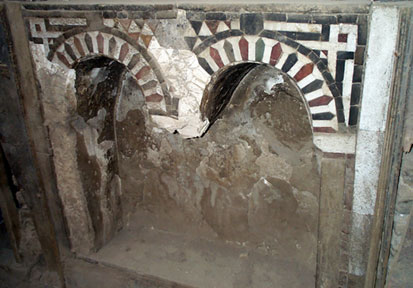
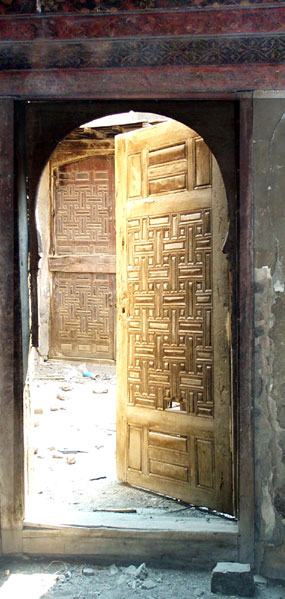
arch detail |
Baytal-RazzazCairo late 1500s - 1800s
conservation in progress March 19, 2004 |
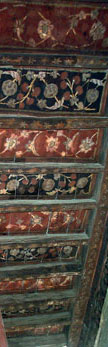
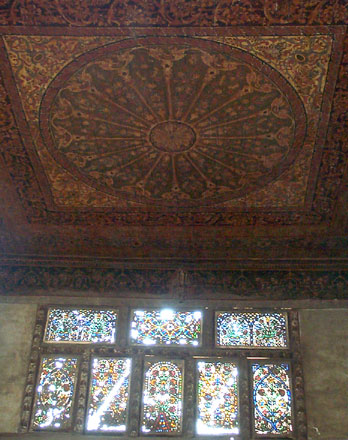
painted ceiling |
|
arch detail |
Baytal-RazzazCairo late 1500s - 1800s
conservation in progress March 19, 2004 |
painted ceiling |
 |
 |
 |
 |
| HISTORY: Today Bayt al-Razzaz,
situated halfway between Bab Zuwayla and the Citadel, is made up of two
courtyards: eastern and western. The eastern courtyard was originally owned
by Sultan al- Ashraf Qait Bay (1490s) whose name is carved on the
entrance. A passageway was opened to join the western courtyard after a
Razzaz daughter married the neighbor's son in the early 1900s.
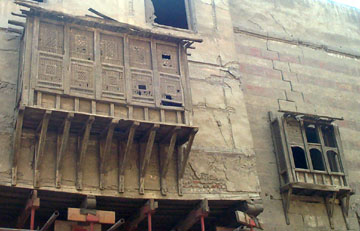
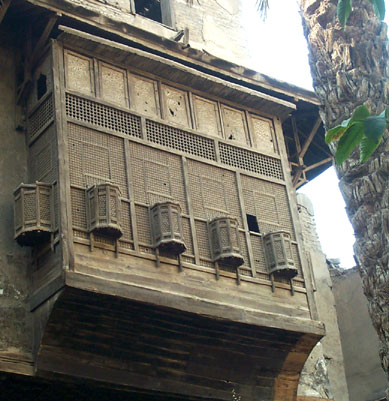
The bayt was constructed in many stages over several centuries with evidence of Mamluk and Ottoman periods. While the structure is huge, 180 rooms, only a small portion of one outer wall faces the street. At one time the eastern bayt was used as "apartments" for relatives as the rooms are not connected but exit to the courtyard. In the western bayt the interconnecting rooms were used by the main family. It contains a majestic grand hall several stories tall. (photo below) The current conservation plans are to prevent further damage to the building by completing structural repairs. The team removed 150 truckloads of trash along with a 1960s air raid shelter. A VW "beetle" remains untouched in the western courtyard pending a 20-year-old court case. The conservators have educated the neighbors as to why depositing garbage on the roofs does damage to an irreplaceable landmark. When conservation started, about 20 families living in the structures relocated their homes. |
 |
 |

grand hall |
 |
| IMPRESSIONS: While standing in
the grand hall (above) we walked in four inches of the finest powdery dust
imaginable. The director asked us to step around a circular indentation
in the floor, a traditional tiled fountain that remains underground
for protection until it can be restored. He estimated it would take
about a million dollars to transform the enormous hall to its previous
grandeur.
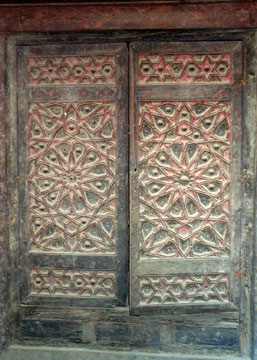
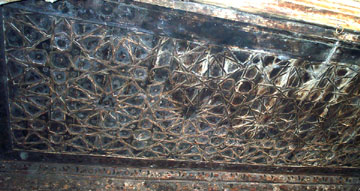
The conservators remove wall plaster carefully and frequently come across wall paintings. In one room a painting of a mosque that resembled the Citadel, appeared. In another we counted six layers of plaster. The current state of disrepair helps one see the house through its centuries of existence. You understand the magic of uncovering the exquisite Islamic decorations, a few of which are shown here. Yet the courtyard style architecture hides the house's magnificence to the public behind the small, unimpressive facade that faces the street. Bayt al-Razzaz is a hidden treasure. |

restored arch eastern courtyard |

open hall western courtyard |
tiled alcove |
|